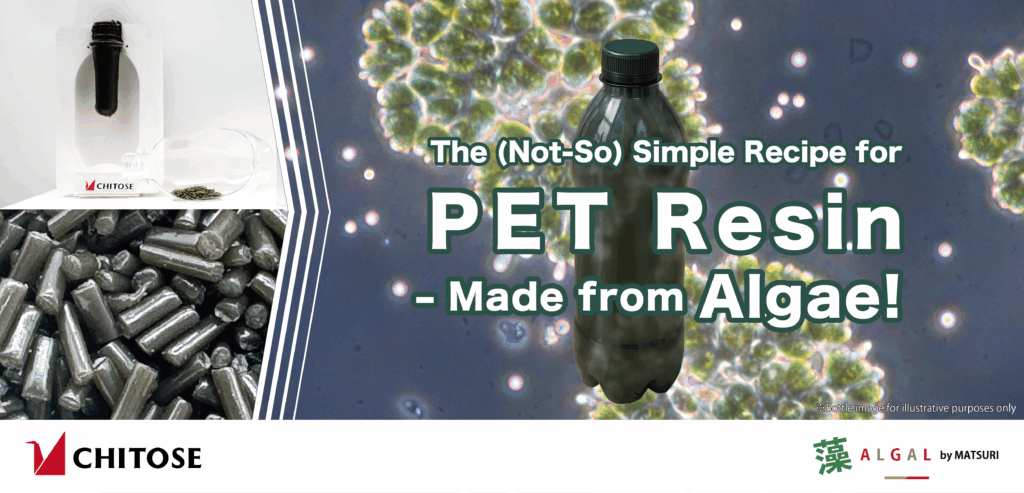
The “ALGAL by MATSURI” exhibit in the Factory Area of the Japan Pavilion at Expo 2025 Osaka showcases the future of manufacturing that utilizes microalgae as a core material. Among the various displays — cosmetics, food, ship fuel, clothing — the one that truly puzzled me the most was PET resin made from microalgae.
Seriously, how on earth do those tiny little green bits turn into resin???
It made absolutely no sense to me, so as a bit of a mental exercise, I thought, “What if I tried to explain it like a cooking recipe?” When I caught the person in charge of PET resin and asked about it, the explanation actually turned out surprisingly clear. So I thought I’d share it with you just as it was explained to me.From here on, please read as if you were looking at a recipe site.

Why we love this recipe
- Guilt-free!
The microalgae used to make the bottles absorb CO₂ as they grow. This means that even if the bottles are eventually incinerated or recycled multiple times, the net increase of CO₂ in the atmosphere is zero. - Requires very little water!
Surprisingly, microalgae can grow with far less water than conventional crops or livestock. - No need for large farmland!
The star of the recipe, microalgae, can thrive even in deserts or wastelands.
Unlike corn or sugarcane, it doesn’t compete with food production. After all, we’d rather use fertile farmland to grow food, not materials.
Directions
- Grow microalage
The microalgae are cultivated with plenty of CO₂ and light.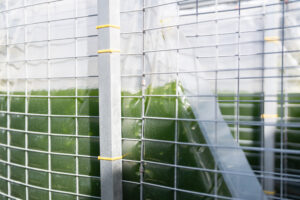
- Extract oil from microalgae
The harvested microalgae are pressed to extract oil. At this stage, the mixture still contains various substances, so it looks thick and black like crude oil. But don’t worry – we are not done yet!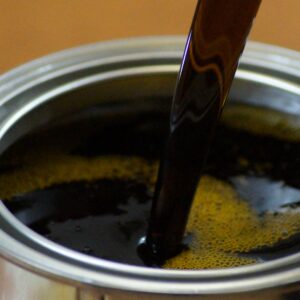
- Purify the Extracted Oil
The black oil is filtered to obtain a clear oil (called botryococcene).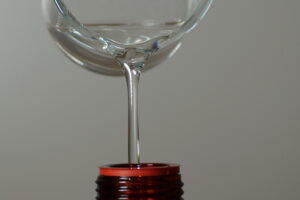
- Sauté in a Cast-Iron Pot
Pour the clear oil (botryococcene) into a specially heated cast-iron pot, add a catalyst, and quickly sauté until it turns crispy. At this stage, the aroma (aromatic compounds) wafts up, filling the air with a fragrance.
 - Extract the Essence
From the fragrant sautéed oil, carefully extract the key liquid: bioparaxylene. This precious drop makes up only a tiny fraction of the whole. To preserve its delicate flavor, cool it immediately.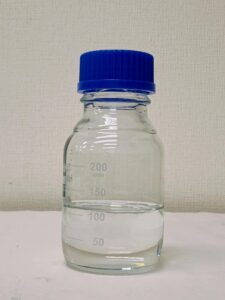
- Add Oxygen and Turn into Powder
By adding oxygen to the extracted liquid (bioparaxylene) and heating while mixing, you create a fine, white powder (bioterephthalic acid).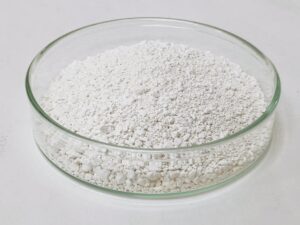
- Make a Paste
Combine the white powder (bioterephthalic acid) with a binding ingredient (bioethylene glycol) and heat to around 250°C, mixing thoroughly. Gradually, the mixture turns into a paste. Temperature control at this stage is very delicate – apparently, it requires the intuition of a skilled tempura chef!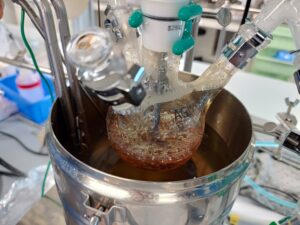
- Shape with an Extruder
Pass the finished paste through an extruder, stretching it into thin strands, like pasta. Once it’s long and noodle-like, cut it into convenient sizes and let it cool, forming pellets. Voilà, your PET resin is ready!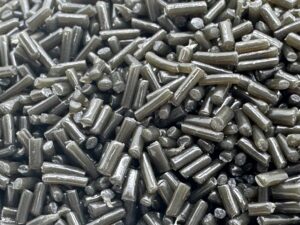
- Extra Tips: Customize Your Creation
The finished PET resin pellets can be melted and poured into molds, then blown with air to make plastic bottles. Stretch them into thin fibers, and you can create textiles for clothing. Have fun experimenting—make your favorite containers, clothes, or any other creative variations!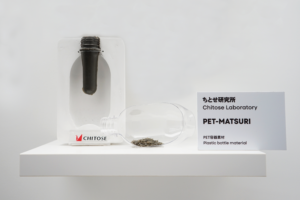
The microalgae-derived PET resin developed by MATSURI was featured at the Japan Pavilion of Expo 2025 as the world’s first and only example of its kind.
Looking ahead, a time may come when PET bottles worldwide are made not from petroleum, but from microalgae.
MATSURI is committed to advancing that future, cultivating both microalgae and industry with dedication and determination. We believe it’s possible, after all the first path has already been paved!
Written by Natsuho Konno / Translated by Tanya Topolian